How to Fix Sinking Patio Pavers Before Your Labor Day Cookout
Natural Designs • August 5, 2026
When you invite friends over for a late summer cookout, the last thing you want is a tripping hazard right in the middle of your gathering area. Natural Designs LLC frequently helps homeowners fix sinking patio pavers before hosting their big events. Uneven hardscapes look neglected and pose a serious risk to anyone walking across them carrying a plate of food. Addressing these dips early prevents the damage from spreading to the rest of your outdoor living space.
Leveling a sunken patio requires more than just adding a handful of sand under the low spots. A lasting repair involves identifying the root cause of the settling and correcting the foundation beneath the surface. Our team approaches hardscape design and repair with an eye for long term stability. You can get your yard ready for guests with a safe, flat surface that looks as good as the day it was installed.
In This Article:
- The Root Cause of Sunken Hardscaping
- How Improper Base Preparation Causes Failure
- Why DIY Leveling Often Leads to More Damage
- Professional Solutions for a Level Surface
- Getting Your Patio Ready for Guests
The Root Cause of Sunken Hardscaping
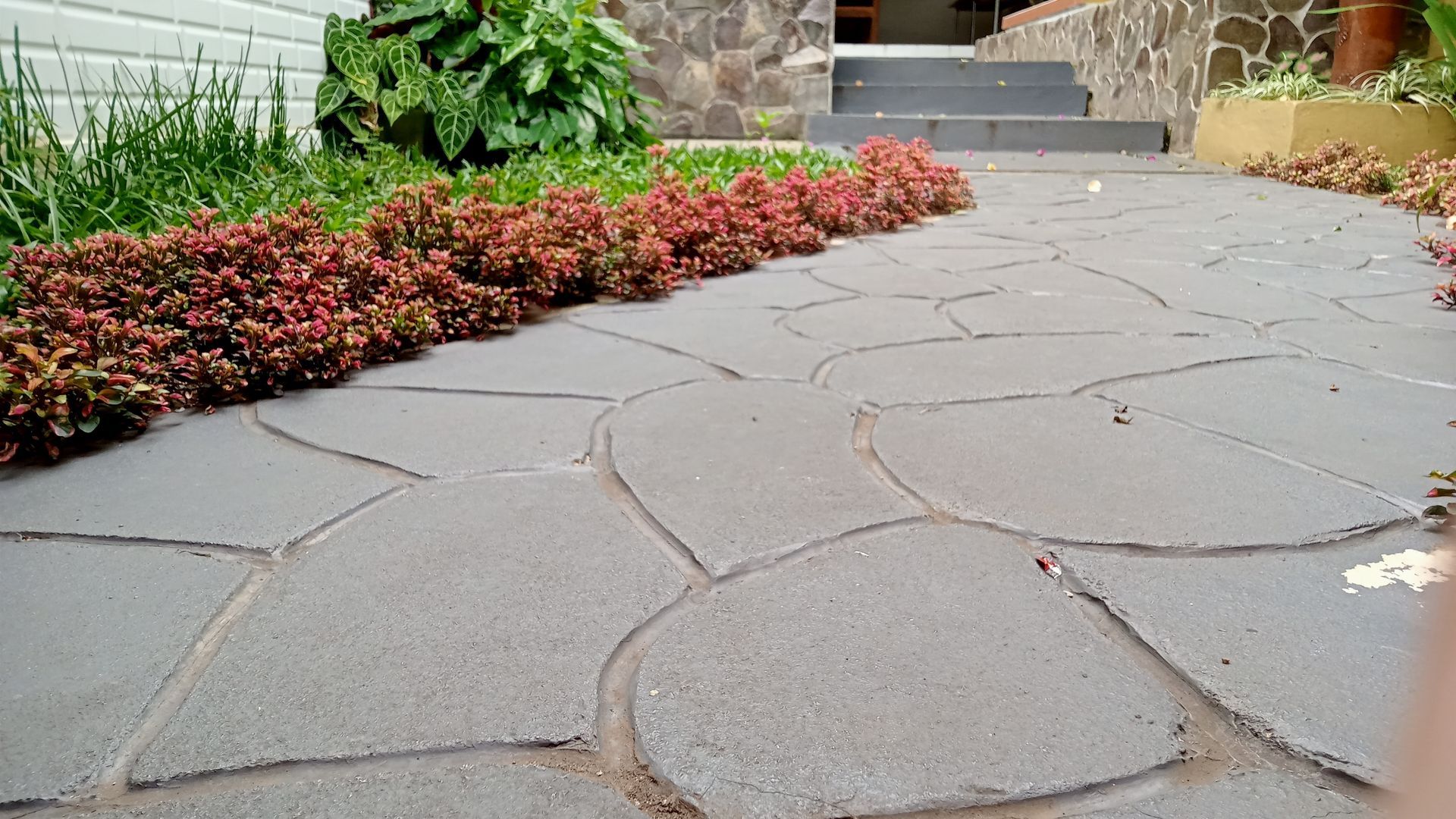
Uneven patios rarely happen overnight. The settling process is usually gradual and often points to an underlying issue with water management or soil composition. Heavy rains and poor drainage pull fine particles out from under the stones, creating voids that eventually collapse under the weight of foot traffic. If your yard lacks proper grading, surface water will naturally pool on the hardscape and erode the bedding layer.
Why do my patio pavers keep sinking?
Patio pavers keep sinking because the base material beneath them is either insufficiently compacted or actively washing away. When water repeatedly flows through the joints without a clear exit path, it destabilizes the entire foundation. Fixing the issue permanently requires pulling up the affected area to rebuild the compacted gravel base and correct the drainage slope.
→ A quick tip to remember: Water pooling on your patio after a rainstorm is the first warning sign that the foundation is beginning to fail.
How Improper Base Preparation Causes Failure
A patio is only as strong as the dirt and rock beneath it. Many builders rush the excavation phase and fail to compact the subsoil before adding gravel. Without a solid, tamped foundation, the natural freeze and thaw cycles of the soil will heave and drop the stones above. We see this issue often in White Salmon, Washington where older installations simply lack the required depth of crushed rock to support heavy use.
Client feedback consistently highlights the importance of getting the design and underlying structure right the first time. We listen carefully to concerns about uneven ground and prioritize a stable, reliable foundation in our landscape design process.
► Client Experience: Matt created a great landscape design for us. He came up with a beautiful design and listened to our needs and made edits based on our feedback. He is really great to work with. - Jonathan Stavros
A collaborative approach ensures that the hidden structural elements meet the exact needs of your property.
Why DIY Leveling Often Leads to More Damage
Pulling up a few stones and dumping play sand into the hole seems like a quick weekend fix. However, standard play sand washes out almost immediately during the next heavy rain. Attempting a DIY repair without tamping the new base material just creates a spongey surface that will sink even deeper over time. Homeowners often end up chipping the edges of their stones when trying to pry them out without the proper extraction tools.
→ From a professional standpoint: Reusing the same sand that previously failed guarantees the problem will return in a matter of months.
Professional Solutions for a Level Surface
Our approach to fixing uneven patios involves carefully removing the affected stones and inspecting the base layers. We dig down to stable ground and build the area back up using crushed angular rock, which locks together to prevent future shifting. Once the base is mechanically compacted and graded, we reset the stones and fill the joints with polymeric sand. This specialized sand hardens to lock the pavers in place while still allowing for slight natural movement. If you notice structural issues elsewhere in your yard, scheduling a landscape consultation can help identify other hidden drainage problems.
→ A quick tip to remember: Upgrading to polymeric joint sand during a repair stops weed growth and prevents ants from excavating your base material.
Getting Your Patio Ready for Guests
A level patio is the foundation of a safe and enjoyable outdoor gathering. By addressing those sunken spots now, you protect your investment and ensure your yard is completely prepared for entertaining. Let our team restore the safety and appearance of your hardscape before your next event. Reach out to schedule a repair assessment today.
Share This Blog