Why You Must Winterize Your Outdoor Kitchen Plumbing Right Now
Natural Designs • September 8, 2026
Dropping temperatures pose a severe threat to built in plumbing and custom hardscapes. Natural Designs LLC warns property owners about why you must winterize your outdoor kitchen plumbing right now. Water expands aggressively when it freezes, easily shattering PVC pipes, brass fittings, and expensive appliance valves. Taking steps to protect your investment before the first hard frost saves you from massive repair bills in the spring.
Winterizing is not just a suggestion for homes in Hood River, Oregon. It is a mandatory process for any exterior water feature or cooking space. Ignoring this window leaves your property vulnerable to hidden leaks that erode hardscape foundations. Following a structured shutdown process guarantees your outdoor living space design survives the coldest months intact.
What We Cover:
- Stage 1: Assess Your Plumbing Lines and Appliance Connections
- Stage 2: Schedule Professional Blowouts and System Drains
- Stage 3: Protect Hardscapes and Built-In Features
- Frequently Asked Questions
- Taking Action Before the Freeze
Stage 1: Assess Your Plumbing Lines and Appliance Connections
The first phase of winterization involves identifying every water source in your outdoor kitchen. Overlooking a single drop down line or ice maker connection results in ruptured pipes.
- Locate Shutoff Valves: Find the main indoor shutoff valve that supplies water to your outdoor cooking area.
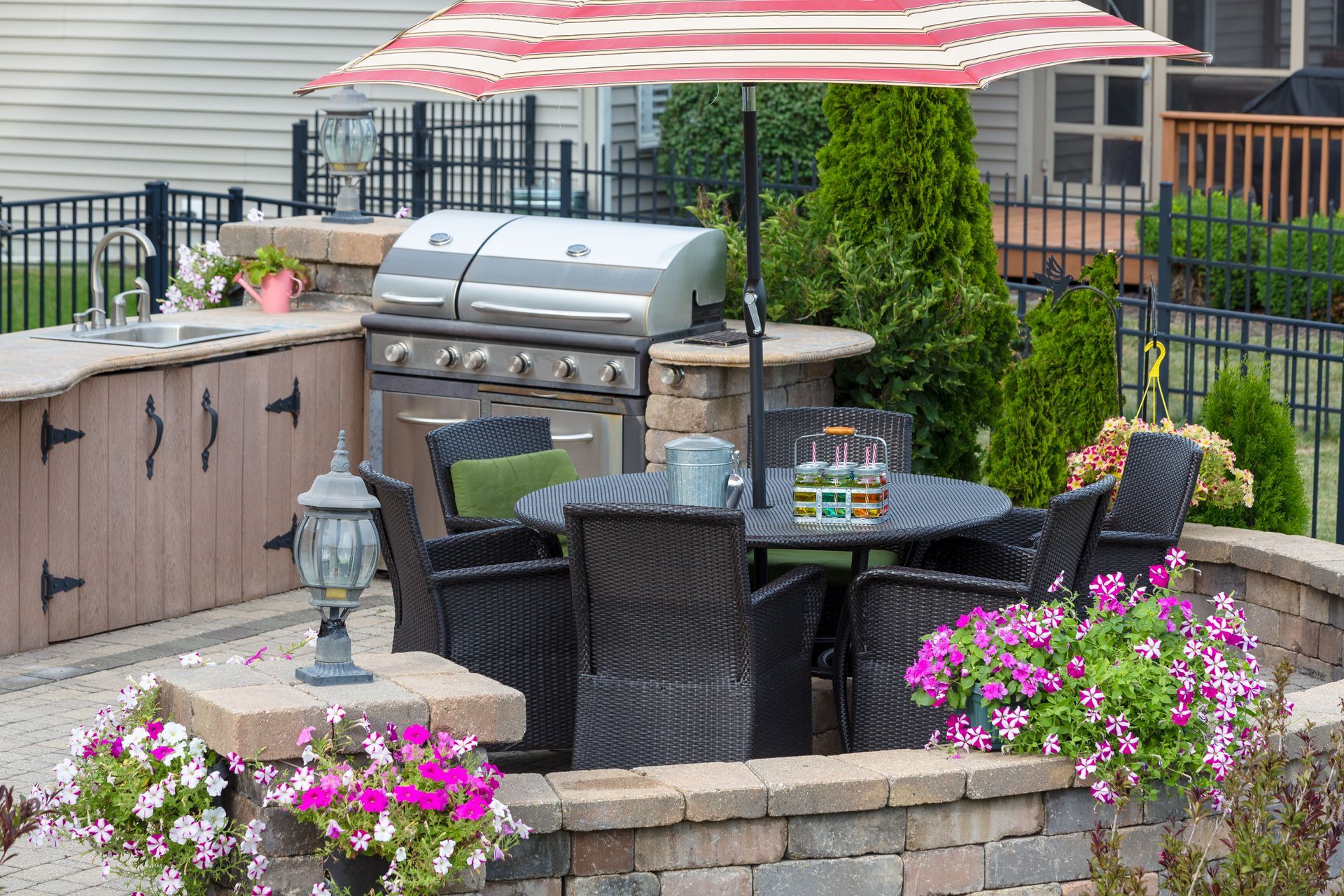
- Inspect Supply Lines: Check all visible hoses and braided lines under the outdoor sink for signs of wear before turning off the system.
- Identify Traps: Locate the P traps under your sink and any floor drains, as these hold standing water that will freeze solid.
Stage 2: Schedule Professional Blowouts and System Drains
Simply turning off the water is never enough to protect underground or enclosed plumbing. Gravity does not remove all the moisture from horizontal pipe runs.
- Close the Main Valve: Turn off the indoor supply valve to completely isolate the exterior plumbing from your home water source.
- Open Exterior Taps: Open the hot and cold handles on your outdoor sink to allow air to flow through the system.
- Clear the Lines: Use an air compressor regulated to a low PSI to gently push all remaining water out of the pipes and appliance lines.
Stage 3: Protect Hardscapes and Built-In Features
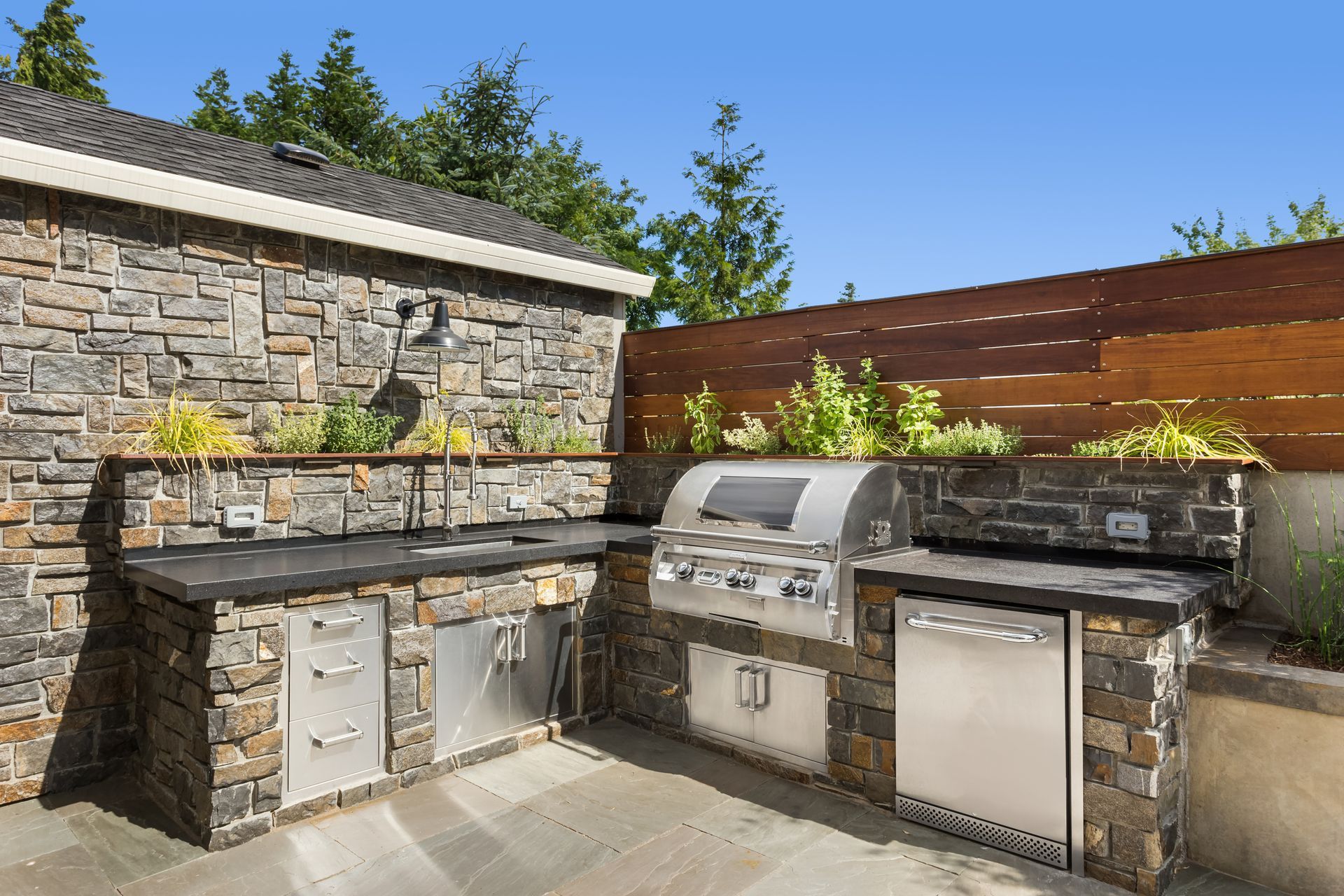
Once the plumbing is secure, you must protect the physical structure of your outdoor kitchen. Moisture penetrating masonry joints will freeze and crack the mortar.
- Clean Surfaces: Scrub your countertops and stainless steel appliances to remove grease that attracts winter pests.
- Apply Stone Sealer: Add a coat of penetrating sealer to natural stone countertops to block freezing rain from seeping into the pores.
- Secure Fitted Covers: Place heavy duty, breathable covers over your grill and island to keep ice and snow from piling up directly on the masonry.
► The most important urgency fact is that a single overnight hard freeze can burst an undrained pipe, destroying the custom masonry surrounding your outdoor kitchen.
Frequently Asked Questions
How do I drain my outdoor sink for winter?
Begin by shutting off the main supply valve located inside your house. Next, open the exterior sink taps to relieve the water pressure. Finally, disconnect the trap under the sink to empty the standing water, or use an air compressor to blow the residual moisture completely out of the lines so it does not freeze and crack the PVC fittings.
Can I leave my built-in grill outside in winter?
Yes, built in grills are designed to withstand exterior conditions, but they require proper preparation. You must shut off the gas line and clean the grease traps thoroughly to deter rodents from nesting inside. Covering the stainless steel with a fitted, breathable cover prevents moisture buildup that causes surface rust.
Should I cover my stone countertops in winter?
Natural stone handles cold weather well, but water freezing in surface pores causes scaling and cracking. Sealing the stone in late fall blocks water absorption. Using a rigid or breathable cover prevents heavy ice dams from forming over the mortar joints and degrading the structural integrity of your kitchen island.
Taking Action Before the Freeze
Freezing weather arrives quickly and leaves zero room for error with exterior plumbing. By assessing your lines and properly draining the system, you prevent catastrophic water damage. Act now to protect your outdoor kitchen before the ground freezes. Call us to book an appointment for professional winterization and hardscape inspection today.
Share This Blog